Daily Riches: New Gestures for a Changed Life (Mark Buchanan)

“Repentance is a ruthless dismantling of old ways of seeing and thinking, and then a diligent and vigilant building of new ones. …We need to change our minds, yes, but we also need to change our ways. And for this we require practices to embody and rehearse our change of mind. The physical is a handmaiden to the spiritual, but a necessary one, without practices—without gestures with which to honor fresh ways of perceiving—any change of mind will be superficial, artificial, short-lived. We might attain a genuinely new thought, but without some way of putting it into practice, the thought gets suck in abstractions, lost in forgetting. Good practices are both catalysts and incubators for new thoughts, they initiate them, and they nurture them. But they do even more: they make real our change of mind. It’s like marriage. When I married my wife, Cheryl, I had to change my mind about who I was. I was no longer a bachelor. My habits of thought had, for more than twenty years, taken shape around the fact of my singleness. I had bachelor attitudes about how to spend time and money, about the ideal color to paint a bedroom, about the best car to drive, about other women. It all had to go through a dramatic shift, in some cases a complete about-face, when I took vows (actually, the change began a long time prior to that, and continues lifelong.) I had to–have to–change my mind. But if I changed only my mind and never changed my behavior, I doubt I’d still be married. I have needed, at every turn, practices that embody and rehearse–that make real–my change of mind. [cf. Zacchaeus’ story in Luke 19] …When salvation comes to your house, first you think differently, then you act differently. First you shift the imagination with which you perceive this world, and then you enact gestures with which you honor it.” Mark Buchanan


“Jesus said to [Zacchaeus], ‘Today salvation has come to this house….'” Luke 19:9

Moving From the Head to the Heart

  • Has “salvation come to your house” but left you frustratingly unchanged?
  • Have your resolutions to change been “short-lived?”
  • Are there practices (“gestures”) that you can adopt to build change into your daily routine, and thereby, your life?

Abba, help me as you and I work out my salvation.

For More: The Rest of God by Mark Buchanan

_________________________________________________

These “Daily Riches” are for your encouragement as you seek after God and he seeks after you. I hope you’ll follow my blog, and share it. My goal is to share something of unique value with you daily in 400 words or less. I appreciate your interest!  –  Bill (Psalm 90:14)

“I practice daily what I believe; everything else is religious talk.”

Daily Riches: Patience with Others … and Yourself (Shirley Carter Hughson and Eugene Peterson)

“I am sure than when St. Paul spoke of ‘the fruit of the Spirit,’ he had in mind such processes that as we find in nature. A tree which brings forth good fruit is able to do so because over many years it has been brought under the influence of cultivation, fertilization, sunshine, rain, caressing winds, [and] cleaning from blight, and so it acquires the power to bear good fruit. A farmer cannot get his result by suddenly becoming very busy for a season and doing these things.”  Shirley Carter Hughson

“The person … who looks for quick results in the seed-planting of well-doing will be disappointed. If I want potatoes for dinner tomorrow, it will do me little good to go out and plant potatoes in my garden tonight. There are long stretches of darkness and invisibility and silence that separated planting and reaping. During the stretches of waiting there is cultivation and weeding and nurturing and planting still other seeds.” Eugene Peterson


“He will be like a tree firmly planted by streams of water,
Which yields its fruit in its season…”
Psalm 1:3

Moving From the Head to the Heart

  • Fruit comes “in its season”, and as a result of years “under the influence of cultivation” and predictable natural processes. Healthy growth takes both time and work, but is definitely does take time. Does your work honor the principle that God cannot be rushed?
  • Are you ever guilty of “suddenly becoming very busy for a season”, of impatiently trying to force things to change?
  • What might God be doing in you or your situation during “long stretches of darkness and invisibility and silence?”
  • With these things in mind, think about people on the journey of faith. What should be your attitude towards fellow pilgrims? What should be your attitude toward yourself? Can you relax and trust God’s timing? What would be the lessons for where you are now? that you may need to learn before you can move on?

Abba, help me to walk rather than to race, to receive rather than to grasp, and to relax rather than to strive. Help me to step into the flow of your divine life rather than living a frenzied version of my very human life. Help me focus on being with you and trust you for the timetable.

__________

For More: The Spiritual Letters of Shirley Carter by Shirley Carter Hughson

_________________________________________________

The “Daily Riches” from RicherByFar are for your encouragement as you seek after God, and as he seeks after you. My goal is to give you something of uncommon value each day in 400 words or less. I hope you’ll follow my blog, and share it with others. I appreciate your interest!  –  Bill (Psalm 90:14)

Daily Riches: Thinking, Feeling, Behaving, Becoming

In the Judeo-Christian tradition both heart (Proverbs 4:23) and mind (Romans 12:2) play a critical place in the spiritual life, but true religion can be defined (James 1:27) and measured (Mt. 25:31ff.) without regard to these things, because the spiritual life is more than just correct thinking (doctrine, theology) and proper feeling (affections, passions). True religion involves behavior (lifestyle, practices). Both heart and mind are penultimate to behavior. Life-change is always the ultimate end in view, always the goal. We know from James, that faith without works is dead (James 2:20), and from Paul that faith leads to obedience (Romans 1:5). The Bible emphasizes these works and this obedience in its ubiquitous calls for love, compassion, understanding and generosity towards others – and in giving God the affection and honor that he deserves. Unfortunately, in the churches, this call to character or Christian lifestyle is often where the story ends. We’re reminded, motivated, inspired, informed and challenged – but often left to ourselves to figure out how to make it work. Yes, be more patient, loving, compassionate. Yes, be a person of prayer, joy, grace, peace. But how? The ancient answer is new again – spiritual disciplines. By them we make space for God to enter our equation. We position ourselves to receive from God and to hear from God. By practicing spiritual disciplines we train ourselves* to be able to do by the grace of God, what we cannot consistently do now: “the right thing in the right way at the right time for the right reason.” The “riches” that I share highlight the value of proven spiritual disciplines and repeatedly remind of them – since we often know, but also forget, what is most important. And since the learning-curve of the Christian life is long (a life-time), we need to return repeatedly to these core practices – practices that you might not often hear emphasized in church (the need to slow down, the need for silence and solitude), or things that aren’t typical in your faith tradition, and not mentioned for that reason (contemplative prayer, fixed-time prayer, keeping of a sabbath). We look to God to change us, but merely looking is not enough. Nor is it enough to learn more, or try harder. Historic spiritual disciplines transcend eras of Christian history, continents, cultures and denominations. Christians of influence in the Roman Catholic, Orthodox and Protestant traditions all testify to their value. As you prayerfully interact with this blog, I hope you will find value in them as well, and that starting with me, we’ll all end up looking more like Jesus.

* “discipline yourself for the purpose of godliness.” 1 Timothy 4:7

Moving From the Head to the Heart

  • Have you settled for merely more information or inspiration?
  • What you’re doing to be more like Jesus – is it working?
  • Are you actually training yourself “to do the right thing … for the right reason?
Abba, keep me moving along the journey of transformation.
.
For More: The Life You’ve Always Wanted by John Ortberg
_________________________________________________

These “Daily Riches” are for your encouragement as you seek after God and he seeks after you. I hope you’ll follow my blog, and share it. My goal is to share something of unique value with you daily in 400 words or less (with today being a rare exception). I appreciate your interest!  –  Bill (Psalm 90:14)

“I practice daily what I believe; everything else is religious talk.”

Daily Riches: Holding Your Breath to Listen (James Emery White, Henri Nouwen and David Whyte)

“We don’t often speak of silence, much less solitude [but]… the power of silence and solitude has been recognized throughout the history of spiritual formation. It is the purposeful separation of ourselves from the world in order to place ourselves with God. The great advantage of the evil one is his ability to assault our senses with the material world in which we live as if to drown out the distant chords from eternity’s symphony. One can only surmise that it was for this reason that Lewis’ Screwtape announces to his nephew Wormwood that one of hell’s goals is to ‘make the whole universe a noise in the end.’ Only in silence can we move past the deafening roar of the world and hear the music of God. Here it is important to remember the difference between spiritual quietness, and the mere absence of sound that creates silence. ‘Silence is the absence of sound and quiet the stilling of sound,’ writes Frederick Buechner. ‘Quiet chooses to be silent. It holds its breath to listen.’ The Rule of St. Benedict speaks of cultivating silence in our lives, with an entire chapter devoted to its pursuit. ‘Unless I am silent I shall not hear God,’ Esther de Waal writes in her reflections on Benedict’s Rule, ‘and until I hear him I shall not come to know him.’ James Emery White

“The silence of solitude is nothing but dead silence when it does not make us alert for a new voice sounding from beyond all human chatter.” Henri Nouwen

Guard your steps as you go to the house of God
and draw near to listen
rather than to offer
the sacrifice of fools”
Ecclesiastes 5:1

“fools multiply words”
Ecclesiastes 10:14

Moving From the Head to the Heart

  • Is your world “a universe of noise?”
  • Is your religious experience mostly about the power of words? (preaching, teaching, evangelizing, praying, singing, sharing, testifying)
  • Do you know what it is to “hold your breath and listen” to hear “a new voice sounding from beyond all human chatter?”
  • Are you making space for the practice of silence and solitude in your daily and weekly schedule?

“Enough. These few words are enough.
If not these words, this breath.
If not this breath, this sitting here.
This opening to the life
we have refused
again an again
until now.
Until now.”
David Whyte

For More:  Serious Times by James Emery White

_________________________________________________

These “Daily Riches” are for your encouragement as you seek after God and he seeks after you. I hope you’ll follow my blog, and share it. My goal is to share something of unique value with you daily in 400 words or less. I appreciate your interest!  –  Bill (Psalm 90:14)

“I practice daily what I believe; everything else is religious talk.”
 

Daily Riches – One Year Anniversary! Thanks all!

On January 1 last year my blog “Daily Riches” was born. Since then, I’ve posted 304 times, had over 20,000 views by people in 108 countries, and gained 184 faithful daily followers.

Screen shot 2014-12-31 at 2.50.17 PM (2)

My most popular post was on “Approval Addiction” (176 views): https://richerbyfar.com/2014/02/06/daily-riches-approval-addiction-richard-foster/

Thanks to so many of you for your encouragement and support in the last year! I wish you the best, and I hope you’ll keep reading and sharing “Daily Riches.”

Bill

Daily Riches: Learning Prayer, Prioritizing Prayer (John Eudes Bamburger and Henri Nouwen)

In The Genesee Diary, Henri Nouwen records his experiment with life in a Trappist Monastery: “…I put this question to [my spiritual director] John Eudes: ‘How can I really develop a deeper prayer life when I am back again at my busy work? …as long as I remain surrounded by unfinished tasks, my prayer is nearly impossible since I use the time for prayer to wonder about the many things I still have to do. It always seems that there is something more urgent and more important than prayer.’ John Eudes’ answer was clear and simple: ‘The only solution is a prayer schedule that you will never break without consulting your spiritual director. Set a time that is reasonable, and once it is set, stick to it at all costs. Make it your most important task. Let everyone know that this is the only thing you will not change and pray at that time. One hour in the morning before work and a half hour before you go to bed might be a good start. Set the exact time and hold on to it. Leave a party when that time approaches. Simply make it an impossibility to do any type of work, even if it seems urgent, important, and crucial. When you remain faithful, you slowly discover that is is useless to think about your many problems since they won’t be dealt with in that time anyhow. …So praying becomes as important as eating and sleeping, and the time set free for it becomes a very liberating time to which you become attached in the good sense.’ …It seems very convincing to me [Nouwen says], even obvious. The only task left is this: simply doing it in obedience.” Henry Nouwen
 .
“devote yourselves to prayer”
1 Corinthians 7:5

Moving From the Head to the Heart

  • Does it always seem to you like there is “something more urgent and more important than prayer?”
  • Would you consider making a reasonable, but essentially inflexible plan for fixed-time prayers?
  • Regular daily prayer is “as important as eating and sleeping.” You probably protect your sleeping and eating time. Isn’t it “obvious” that you must also plan for and protect your praying time? How will you do that?

Abba, teach me a faithfulness in prayer that results in liberation from my self-imposed, misguided tyranny.

For More: The Genesee Diary by Henri Nouwen (more from Bamburger from this diary entry)

_________________________________________________

These “Daily Riches” are for your encouragement as you seek after God and he seeks after you. I hope you’ll follow my blog, and share it. My goal is to share something of unique value with you daily in 400 words or less. I appreciate your interest!  –  Bill (Psalm 90:14)

“I practice daily what I believe; everything else is religious talk.”


Daily Riches: When You Don’t Need Spiritual Disciplines (John Ortberg, Dallas Willard and Anthony de Mello)

“The master was asked, ‘What is spirituality?’

He said, ‘Spirituality is that which succeeds
in bringing one to inner transformation.’
‘But if I apply the traditional methods handed
down by the masters, is that not spirituality?’
‘It is not spirituality if it does not perform
its function for you. A blanket is no longer a
blanket if it does not keep you warm.’
‘So spirituality does change?’
‘People change and needs change. So what was
spirituality once is spirituality no more. What
generally goes under the name of spirituality
is merely the record of past methods.’
Anthony de Mello

 “A disciplined person is not simply someone who exercises many disciplines. …Disciplined people can do what is called for at any given moment. They can do the right thing at the right time in the right way for the right reason. This definition applies to artists and athletes and astronauts as well as to followers of Jesus. A disciplined follower of Jesus – a ‘disciple’ – is not someone who has ‘mastered the disciplines’ and never misses a daily regimen of spiritual exercises. A disciplined follower of Jesus is someone who discerns when laughter, gentleness, silence, healing words, or prophetic indignation is called for, and offers it promptly, effectively, and lovingly.” John Ortberg

“The aim and substance of spiritual life is not fasting, prayer, hymn singing, frugal living, and so forth. …People who think that they are spiritually superior because they make practice of a discipline such as fasting or silence or frugality are entirely missing the point. The need for extensive practice of a given discipline is an indication of our weakness, not our strength. …the true indicator of spiritual well-being is growth in the ability to love God and people. If we can do this without the practice of any particular spiritual disciplines, then we should by all means skip them.” Dallas Willard

“I discipline my body like an athlete,
training it to do what it should.”
1 Corinthians 9:27

Moving From Head to Heart

  • Do you practice spiritual disciplines? Why or why not?
  • Do you often “do the right thing at the right time in the right way for the right reason?”
  • How are you doing at “loving God and people?”

Abba, help me do the right thing at the right time in the right way for the right reason.

For More:  The Spirit of the Disciplines by Dallas Willard

_________________________________________________

These “Daily Riches” are for your encouragement as you seek after God and he seeks after you. I hope you’ll follow my blog, and share it. My goal is to share something of unique value with you daily in 400 words or less. I appreciate your interest!  –  Bill (Psalm 90:14)

“I practice daily what I believe; everything else is religious talk.”

Daily Riches: Spiritual Formation and the Love of Books (Henry Ward Beecher and Charles H. Spurgeon)

“Where is human nature so weak as in a bookstore?” Henry Ward Beecher

“He was inspired, and yet he wants books!
He had been preaching for thirty years, and yet he wants books!
He had seen the Lord, and yet he wants books!
He had a wider experience than most men do, and yet he wants books!
He had been caught up into the third heaven, and had heard things that it was not lawful for a man to utter, and yet he wants books!
He had written a major part of the New Testament, and yet he wants books!” Charles Haddon Spurgeon on the Apostle Paul

“Give yourself to reading. …Master those books you have. Read them thoroughly. Bathe in them until they saturate you. Read and reread them…digest them. Let them go into your very self. Peruse a good book several times and make notes and analyses of it. A student will find that his mental constitution is more affected by one book thoroughly mastered than by twenty books he has merely skimmed. Little learning and much pride comes from hasty reading. Some men are disabled from thinking by their putting meditation away for the sake of much reading. In reading let your motto be ‘much not many.’” Spurgeon

 “When you come bring the cloak which I left at Troas with Carpus,
and the books, especially the parchments.”
2 Timothy 4:13

“But beyond this, my son, be warned:
the writing of many books is endless,
and excessive devotion to books
is wearying to the body.”
Ecclesiastes 12:12

Moving From the Head to the Heart

  • Do agree that both reading too little or reading too much can be a problem?
  • Do you carve out time to read regularly and deeply? Do you also read widely – e.g., interacting with authors from other times, other continents, other cultures – people’s whose temperament, race, gender, economic status, politics or religion is very different from yours?
  • Can you relate to the danger of “putting meditation away for the sake of much reading?” If this is a temptation for you, what is behind it? What exactly is the danger for you?

Abba, thank you for all the men and women whose books I turn to again and again. Their words help me to hear your Words. Draw me closer to you through them.

For More:  Lectures to My Students by Charles H. Spurgeon
_________________________________________________

These “Daily Riches” are for your encouragement as you seek after God and he seeks after you. I hope you’ll follow my blog, and share it. My goal is to share something of unique value with you daily in 400 words or less. I appreciate your interest!  –  Bill (Psalm 90:14)

“I practice daily what I believe; everything else is religious talk.”


Daily Riches: Grieving and the Vast Emptiness of Loss (James Baldwin, C. S. Lewis, Richard Rohr, John Green, Henri Nouwen)

“You think your pain and your heartbreak are unprecedented in the history of the world, but then you read.” James Baldwin

“For in grief nothing ‘stays put.’ One keeps on emerging from a phase, but it always recurs. Round and round. Everything repeats.  …how often will the vast emptiness astonish me like a complete novelty and make me say, ‘I never realized my loss till this moment’? The same leg is cut off time after time.” C. S. Lewis

“‘All great thought springs from a conflict between two eventual insights: (1) The wound which we find at the heart of everything is finally incurable, (2) Yet we are necessarily and still driven to try!’ [Hans Urs von Balthasar] Selah. Our largely unsuccessful efforts of the first half of life are themselves the training ground for all virtue and growth in holiness. This wound at the heart of life shows itself in many ways, but your holding and “suffering” of this tragic wound, your persistent but failed attempts to heal it, and your final surrender to it, will ironically make you into a wise and holy person. It will make you patient, loving, hopeful, expansive, faithful, and compassionate—which is precisely second-half-of-life wisdom.” Richard Rohr

“We all want to do something to mitigate the pain of loss or to turn grief into something positive, to find a silver lining in the clouds. But I believe there is real value in just standing there, being still, being sad.” John Green

“Just as bread needs to be broken in order to be given, so, too, do our lives.”  Henri Nouwen

“… unless a grain of wheat
falls into the earth and dies,
it remains alone; but if it dies,
it bears much fruit.”
Jesus in John 12:24

Moving From the Head to the Heart

  • Our sense of loss grows over time as we experience a loss “time after time.” Have you suffered like that?
  • Have you quit trying to understand your loss, heal it – or find its “silver lining?” Have you allowed yourself to feel it rather than flee from it?
  • Why might someone “need to be broken” by what feels like “unprecedented” heartbreak? Can you trust God to work in the space created by your loss – with no explanation and slow healing – but bringing life out of death?

Abba, meet me in my losses.

For More:  A Grief Observed by C. S. Lewis
_________________________________________________

These “Daily Riches” are for your encouragement as you seek after God and he seeks after you. I hope you’ll follow my blog, and share it. My goal is to share something of unique value with you daily in 400 words or less. I appreciate your interest!  –  Bill (Psalm 90:14)

“I practice daily what I believe; everything else is religious talk.”

Daily Riches: Hitting Bottom, Engulfed in Darkness (Barbara Brown Taylor, Brennan Manning and Richard Rohr)

“I have learned things in the dark that I could never have learned in the light, things that have saved my life over and over again….” Barbara Brown Taylor

“When we have hit bottom and are emptied of all we thought important to us, then we truly pray, truly become humble and detached, and live in the bright darkness of faith. In the midst of the emptying we know that God has not deserted us. He has merely removed the obstacles keeping us from a deeper union with Him. Actually we are closer to God than ever before, although we are deprived of the consolations that we once associated with our spirituality. What we thought was communion with Him was really a hindrance to that communion. …The theology of the dark night is simplicity itself. God strips us of natural delights and spiritual consolations in order to enter more fully into our hearts.” Brennan Manning

“The path of descent is the path of transformation. Darkness, failure, relapse, death, and woundedness are our primary teachers, rather than ideas or doctrines.” Richard Rohr

“…God disciplines us for our good, that we may share in his holiness.” Hebrews 12:10

Moving From the Head to the Heart

  • We might think we want a “deeper union with God” until we learn what God does to “remove obstacles” that hinder that. He may empty us of “all we thought important”, and leave us feeling deserted and deprived of pleasures we depend on. Our usual consolation in God’s presence and gifts may evaporate. Is your desire for deeper union with God greater than your desire to escape this painful “path of transformation?”
  • Imagine how confusing and unpleasant this can be, especially for someone who is unaware of this necessity. Are you aware of the likelihood that such an experience is in your future? If you minister to others, are you warning them?
  • We have probably learned and perhaps teach others that learning “doctrines” is the key to spiritual formation. Is this your approach? Can you see why this approach is not enough in itself? If so, what are the implications for you? For your ministry?

Abba, help me to want you more than the other things that compete for your place. Sustain me in the journey to deeper union with you.

For More: The Signature of Jesus by Brennan Manning
_________________________________________________

These “Daily Riches” are for your encouragement as you seek after God and he seeks after you. I hope you’ll follow my blog, and share it. My goal is to share something of unique value with you daily in 400 words or less. I appreciate your interest!  –  Bill (Psalm 90:14)

“I practice daily what I believe; everything else is religious talk.”

Daily Riches: When You’re “Disappearing” (David Whyte, Hafiz, Matthew Fox, Flannery O’Connor, Teresa of Avila) *

“It might be liberating for us to think of our onward life being informed as much by our losses and disappearances as by our gifted and virtuoso appearances and our marvelous arrivals. As if the foundational invitation being made to us at the core of our continual living and dying is an invitation to participate in the full seasonality of existence. Not just to feel fully here and fully justified in those haloed times when we are growing and becoming, and seen to be becoming, but also, to be just as present and to feel just as much here when we are in the difficult act of disappearing, often against our wills, making way often, for something we cannot as yet comprehend. The great and ancient art form and its daily practice; of living the full seasonal round of life; and a touchstone perhaps, of the ultimate form of human generosity: continually giving ourselves away to see how and in what form we are given back.” David Whyte in “Thoughts from San Miguel de Allende”

“Soul is our appetite, driving us to eat from the banquet of life. People filled with the hunger of soul take food from every dish before them, whether it be sweet or bitter.” Matthew Fox

img_0260

Tired of Speaking Sweetly
“Love wants to reach out and manhandle us,
Break all our teacup-talk of God.
If you had the courage and
Could give the Beloved His choice, some nights,
He would just drag you around the room by your hair,
Ripping from your grip all those toys in the world
That bring you no joy.”
~ Hafiz

“If you cling to your life, you will lose it,
and if you let your life go, you will save it.”
Jesus in Luke 17:33

Moving From the Head to the Heart

  • Are you continually “living and dying?” Do you hear the “foundational invitation” that comes to you there?
  • Have losses and limits (perhaps aging) taught you about “disappearing?” about accepting something against your will? in a situation where you do not “comprehend?”
  • Can you explain what the words of Whyte, Hafiz, Fox, O’Connor and Jesus – perhaps all in unison – mean for your life?

“If I have you God, I will want for nothing. You alone suffice.”* Abba, work in me to make this my truth.

__________

*For More: Let Nothing Disturb You by Teresa of Avila

_________________________________________________

These “Daily Riches” are for your encouragement as you seek after God and he seeks after you. I hope you’ll follow my blog, and share it. My goal is to share something of unique value with you daily in 400 words or less. I appreciate your interest!  –  Bill (Psalm 90:14)

“I practice daily what I believe; everything else is religious talk.”


Daily Riches: Failure is Normal and Essential (John Ortberg)

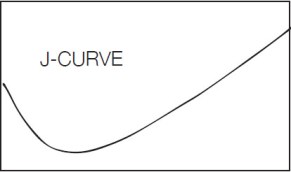
“Experts in the learning field sometimes talk about the J-curve, a graph measuring performance, in which someone initially does worse before they start improving….

J-curve

The J-curve is normal: We do worse for a season before we do better. If you have been hitting tennis backhands the wrong way, when someone teaches you the correct grip, proper form, and right footwork, when you begin to try to hit them the right way — you will actually hit them worse than when you were trying the wrong way! If you stick with it, however, eventually your backhand will be far better than before. But you have to accept that at first it will be worse. When the disciple Peter first exercised enough faith to get out of the boat, he sank and looked worse than any of the other disciples. When he tried to defend Jesus, he cut off a man’s ear. When he promised to be loyal, he fell flat on his faith. When he tried to advise Jesus, he was a devil’s advocate. Eventually, though, Peter’s faith and boldness and loyalty and wisdom enabled him to become a leader of the church. But he got worse before he got better. Notice that this did not surprise or discourage Jesus. In fact, Jesus was so patient with his disciples that we might think of the J-curve as the Jesus-curve. He will never stop helping a follower of his who is sincerely seeking to grow. Jesus will always lead us toward growth, and growth always requires risk, and risk always means failure. So Jesus is always leading us into failure. But he never gives up on a student just because he or she fails. …Go ahead and stumble. Failure isn’t falling down; failure is refusing to try. We ought to celebrate failure. We are living on the J-curve.” John Ortberg

“My flesh and my heart may fail,
but God is the strength of my heart….”
Psalm 73:26

Moving From the Head to the Heart

Even the J-curve is misleading. There’s no steady uphill line. Think about the zig-zag that would represent Peter’s life!

  • Are you afraid of risking? of failing?
  • Can you be as patient with yourself as Jesus is?
  • Are you determined to keep getting back up when you fail?

Abba, use my failures to make me wiser, strong, better.

__________

For More: The Me I Want to Be by John Ortberg

_______________


These “Daily Riches” are for your encouragement as you seek after God and he seeks after you. I hope you’ll follow my blog, and share it. My goal is to share something of unique value with you daily in 400 words or less. I appreciate your interest!  –  Bill (Psalm 90:14)

“I practice daily what I believe; everything else is religious talk.”

Daily Riches Book Notes: Finding Our Way Again: The Return of the Ancient Practices by Brian McLaren

As the subtitle says, this book calls us to remember and put into practice forgotten ways of the ancient church – ways or practices we need to embrace again if we are to “find our way.” The book introduces an impressive new series The Ancient Practices Series, edited by Phillis Tickle, where many of the traditional spiritual disciplines will be covered, one per book. The plan for succeeding volumes is for books devoted to prayer, the sabbath, fasting, the eucharist, the journey, the liturgical year, and tithing. Besides touching on these, in this first book McLaren includes insights on suffering, stillness, secrecy, simplicity, slowness, simplicity, fixed-time prayer, hospitality, memorization and others. I really liked his discussion of St. Francis.

I found the book to be a rare treasure – heart-stiriring, and hope-giving – always challenging the reader to to move from the head to the heart. A short and easy read, the book deserves to be lingered over and savored. McLaren has a beautiful ability to take the seemingly stuffy, theoretical, tedious or unfamiliar, and make it interesting, easily accessible, and patently relevant. I found the wideness of vision in the book (see chapter 20) surprising, even stunning, and worthy of the living God. The final chapter alone is worth the price of the book, and the Notes at the end make for a valuable treasure trove of other important, related resources.

I’m late discovering McLaren, but I’ll definitely be digging into his other books. If you’re also not familiar, be sure to take a look at this book. I don’t think you’ll come away unchanged.

______________

Book Notes are a new addition to my blog Daily Riches. Notes will be posted sporadically, and only to subscribers to the blog – just to keep it simple for me. (If you’re connecting to Daily Riches through Twitter or Facebook, you will have to subscribe to richerbyfar.com to receive Book Notes.) As always, thanks for reading – and please, share your thoughts and opinions on these books! Thanks much – and thanks for joining me on what reader has called “this wobbly journey.” –  Bill (Psalm 90:14)

“I practice daily what I believe; everything else is religious talk.”

Daily Riches: Spiritual Maturity – What Does It Look Like? (Dallas Willard, Brennan Manning, John Ortberg, Thomas Merton) *

“The aim and substance of spiritual life is not fasting, prayer, hymn singing, frugal living, and so forth. Rather, it is the effective and full enjoyment of active love of God and humankind in all the daily rounds of normal existence where we are placed. …People who think that they are spiritually superior because they make practice of a discipline such as fasting or silence or frugality are entirely missing the point. The need for extensive practice of a given discipline is an indication of our weakness, not our strength.” Dallas Willard

“The Rabbi [Jesus] implores, ‘Don’t you understand that discipleship is not about being right or being perfect or being efficient? It’s all about the way you live with each other.’ In every encounter we either give life or we drain it. There is no neutral exchange. We enhance human dignity, or we diminish it. The success or failure of a given day is measured by the quality of our interest and compassion toward those around us. We define ourselves by our response to human need.  …We reveal our heart in the way we listen to a child, speak to the person who delivers mail, bear an injury, and share our resources with the indignant.” Brennan Manning

“We do not go into the desert to escape people but to learn how to find them; we do not leave them in order to have nothing more to do with them but to find out the way to do them the most good.”  Thomas Merton

“…love is the fulfillment of the law.” Romans 13:10

Moving From the Head to the Heart

  •  Are you aware of weaknesses in your life and your need for “help to do what you cannot do now by willpower alone?” (John Ortberg’s definition of spiritual disciplines) Are you practicing some disciplines for that reason?
  • Do you measure the success of your day by “compassion [demonstrated] toward those around you” rather than by faithfulness in the disciplines?
  • Rejecting the practice of spiritual disciplines could be evidence of pride, and serious practice of them could be a source of pride. In the next days, take some time to consider this before the Lord.

Abba, help me to do what I cannot do by willpower alone as I embrace life-giving rhythms and practices.

 __________

For More: The Spirit of the Disciplines by Dallas Willard

_________________________________________________

These “Daily Riches” are for your encouragement as you seek after God and he seeks after you. I hope you’ll follow my blog, and share it. My goal is to share something of unique value with you daily in 400 words or less. I appreciate your interest!  –  Bill (Psalm 90:14)

“I practice daily what I believe; everything else is religious talk.”


Daily Riches: Putting Painful Longings in Perspective (Larry Crabb and Frederick Buechner) *

“First, our desires … are related not only to our fallenness but also, and more profoundly, to our humanness. In other words, it’s okay to desire. Second, when we look carefully at what we deeply desire, we come to realize that what we want is simply not available, not until Heaven. …Both errors in responding to our longings–hiding them in a flurry of Christian activity and focusing on them to find satisfaction–deny the simple truth that we legitimately want what we cannot have in this world. We were designed to live in a perfect world uncorrupted by the weeds of disharmony and distance. Until we take up residence in that world, however, we will hurt. It is, therefore, not only okay to desire, it is also okay to hurt.”  Larry Crabb

“… to grit your teeth and clench your fists in order to survive the world at its harshest and worse–is by that very act, to be unable to let something be done for you and in you that is more wonderful still. The trouble with steeling yourself against the harshness of reality is that the same steel that secures your life against being destroyed secures your life also against being opened up and transformed.” Frederick Buechner

Scorn has broken my heart
    and has left me helpless;
I looked for sympathy, but there was none,
    for comforters, but I found none.
They put gall in my food
    and gave me vinegar for my thirst.”
Psalm 69:19-21 

Moving From Head to Heart

  • Are Christians allowed to have emotions like loneliness, sadness, and disappointment? Do you allow yourself to feel these kinds of emotions?
  • Do you try to bury your emotions “in a flurry of Christian activity?”
  • Do you “steel yourself” against feeling “the harshness of reality” by sheer force of the will?
  • Imagine the loneliness, disappointment and heartbreak that filled the life of Jesus. He didn’t let these emotions rule him, but he also didn’t deny or bury them. He offered them to his Father and “let something be done for him” that was “more wonderful” than being strong. He experienced life from above while in this world corrupted “by the weeds of disharmony.” Can you let God do that for you?

Abba, help me learn to embrace my emotions – even the most painful ones. Help me not to fear them, but to allow you to work in me through them. Help me to discover something more wonderful than being strong. Help me to be transformed.

__________

For More: Inside Out by Larry Crabb

_________________________________________________

Thanks for your interest in Daily Riches! –  Bill (Psalm 90:14)